Beyond the Ribeye: What the Carnivore Craze Gets Right — and Wrong — About Male Hormones
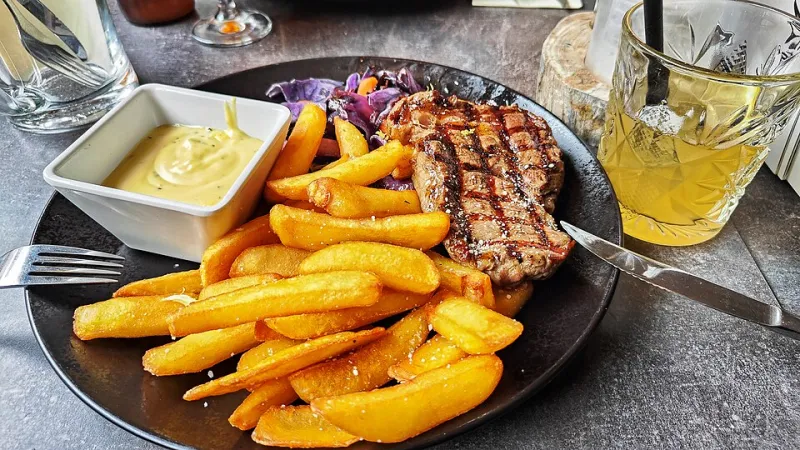
Photo: Socket0, CC0, via Wikimedia Commons
Few dietary movements have marketed themselves to male virility as directly as the carnivore diet. Scroll through the hashtags and you'll find the implied promise everywhere: eat like a predator, produce like a bull. Steaks and eggs are framed not just as food but as hormonal fuel.
There's a kernel of legitimate science underneath the marketing. But the full picture is more complicated — and men making long-term decisions about their health deserve the whole thing.
What Carnivore Gets Right
Dietary fat and cholesterol are, genuinely, the building blocks of testosterone. Steroid hormones are synthesized from cholesterol, and research stretching back decades has shown that very-low-fat diets — below roughly 20 percent of total calories — are associated with measurably lower testosterone in active men. In a nutritional era when many mainstream diets pushed fat restriction to extremes, the carnivore movement's insistence on dietary fat was a corrective of sorts.
The diet is also, almost by accident, rich in nutrients relevant to hormone production: zinc from red meat, vitamin B12, highly bioavailable protein, and — if organ meats are on the menu — meaningful amounts of vitamin A and choline.
For men coming from a background of processed food and seed-oil-heavy convenience eating, the switch often produces dramatic short-term improvements in body composition and energy. Some of that improvement is simply the elimination of the worst parts of the standard American diet.
Where the Story Breaks Down
The problems emerge when an elimination tool becomes a permanent identity.
The fiber question is real. Fiber does not directly raise testosterone, but it shapes the gut environment that regulates estrogen reabsorption and inflammation. Chronic constipation, gut microbiome shifts, and digestive complaints are among the most commonly reported issues in long-term carnivore adherents — and chronic gut inflammation is a documented suppressor of the HPG axis.
Micronutrient gaps accumulate slowly. Vitamin C, vitamin E, potassium, and magnesium are difficult to obtain in optimal amounts from muscle meat alone. Deficiencies here don't cause dramatic symptoms at first; they cause gradual erosion — of recovery, of mood, of the very vitality the diet promised.
Long-term data doesn't exist. The strongest testosterone evidence for carnivore-style eating is short-term and anecdotal. No longitudinal study has tracked hormone profiles in men eating exclusively animal products for years. Claims of sustained hormonal superiority rest on belief, not data.
Cardiovascular risk hasn't disappeared. Elevated LDL cholesterol is a common finding in carnivore adherents, and whatever one's position on the cholesterol debate, a man optimizing for longevity and vitality should not ignore it.
The Pragmatic Middle Path
The honest reading of the evidence suggests neither the carnivore evangelists nor their loudest critics have it exactly right. A hormone-supportive diet for most American men looks like this:
- Adequate fat intake — 25 to 35 percent of calories, weighted toward eggs, red meat, fatty fish, and olive oil
- Sufficient cholesterol-containing foods, without treating them as a magic ritual
- Fiber from sources you tolerate — vegetables, fruit, legumes, or whole grains
- A broad micronutrient base, because testosterone synthesis is a team effort involving zinc, magnesium, vitamin D, and more
- Enough total calories, because no food selection rescues a man in a chronic energy deficit
The Bottom Line
If a carnivore phase helps you break away from processed food, that's a win worth having. But the steak-and-eggs lifestyle is not a testosterone protocol — it's a dietary template with genuine strengths and genuine blind spots. Men optimizing their hormones should take the fat-and-cholesterol lesson and leave the absolutism behind.