Two Systems, One Breakdown: How Thyroid Dysfunction Quietly Undermines Your Testosterone
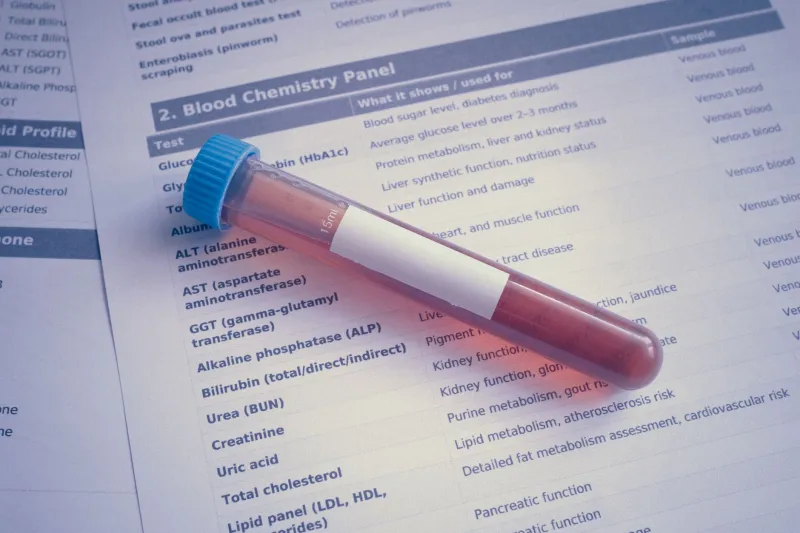
For men focused on optimizing their hormonal health, testosterone rightfully commands most of the attention. But there is another endocrine player operating behind the scenes — one that directly influences how testosterone is produced, converted, and utilized throughout the body. The thyroid gland, a small butterfly-shaped structure at the base of the neck, governs metabolic rate, energy production, and cellular function at a fundamental level. When it underperforms, even subtly, the downstream consequences for testosterone can be significant — and largely invisible to the clinician who only ordered a standard hormone panel.
This is not a niche problem. According to the American Thyroid Association, an estimated 20 million Americans have some form of thyroid disease, with up to 60 percent unaware of their condition. Among men, thyroid dysfunction is frequently underdiagnosed, partly because the symptoms — fatigue, weight gain, reduced libido, and diminished workout recovery — are often attributed to low testosterone alone. The result is a clinical blind spot that leaves many men chasing the wrong variable.
What the Thyroid Actually Does — and Why It Matters for Testosterone
The thyroid produces two primary hormones: thyroxine (T4) and triiodothyronine (T3). T4 is the more abundant but largely inactive form; T3 is the biologically active hormone that drives metabolism at the cellular level. The conversion of T4 to T3 occurs primarily in peripheral tissues, including the liver and kidneys, and requires adequate nutrient cofactors such as selenium, zinc, and iodine.
Testosterone production is regulated by the hypothalamic-pituitary-gonadal (HPG) axis, but this axis does not operate in isolation. Thyroid hormones influence the sensitivity of Leydig cells — the testicular cells responsible for testosterone synthesis — to luteinizing hormone (LH). When T3 levels are insufficient, Leydig cell responsiveness can diminish, resulting in reduced testosterone output even when LH signaling appears normal. In practical terms, this means a man's pituitary may be sending the right instructions, but the testes are not receiving them with full efficiency.
Furthermore, hypothyroidism is associated with elevated levels of sex hormone-binding globulin (SHBG), the protein that binds testosterone in the bloodstream and renders it biologically unavailable. A man may present with a total testosterone reading that falls within the reference range, yet his free testosterone — the fraction that actually interacts with receptors — may be meaningfully suppressed due to elevated SHBG driven by thyroid insufficiency.
The Problem with Standard Thyroid Testing
Most primary care physicians screen for thyroid dysfunction using a single marker: thyroid-stimulating hormone (TSH). TSH is a pituitary hormone that signals the thyroid to produce more T4 and T3. When TSH is elevated, it suggests the thyroid is underperforming; when it falls within the standard reference range of roughly 0.4 to 4.0 mIU/L, the thyroid is typically declared healthy.
The limitation of this approach is significant. TSH reflects the pituitary's perception of thyroid output — not the actual availability of active T3 at the cellular level. A man can have a TSH of 2.5 mIU/L, which appears entirely normal, yet still have suboptimal free T3 levels due to poor conversion efficiency. Without measuring free T3, free T4, and reverse T3 — the inactive metabolite that competes with T3 at receptor sites — the full picture remains obscured.
Reverse T3 (rT3) deserves particular attention in the context of hormonal optimization. Under conditions of chronic stress, caloric restriction, overtraining, or inflammation, the body preferentially converts T4 into rT3 rather than active T3. This acts as a metabolic brake — an adaptive mechanism designed to conserve energy under perceived threat. For men engaged in demanding training programs or operating under sustained psychological stress, elevated rT3 can effectively suppress metabolic function and testosterone production simultaneously, even while TSH and total T4 remain unremarkable.
Recognizing the Overlap: Symptoms That Belong to Both Systems
One reason the thyroid-testosterone connection is so frequently missed is that the symptom profiles of hypothyroidism and low testosterone are nearly identical. Both conditions can present with:
- Persistent fatigue that is disproportionate to sleep quantity
- Reduced motivation and cognitive fog
- Diminished libido and erectile difficulty
- Slower recovery between training sessions
- Difficulty losing body fat despite consistent effort
- Mood changes, including irritability or low-grade depression
When a man presents with this cluster of complaints, the clinical default is often to order a testosterone panel. If total testosterone falls within range — or even at the lower boundary of normal — the conversation may end there. The thyroid is never interrogated. The patient leaves with a prescription for a lifestyle adjustment or, in some cases, testosterone replacement therapy that addresses the symptom but not the underlying cause.
This creates a scenario where exogenous testosterone is layered onto an unresolved thyroid deficiency. While TRT may temporarily alleviate some symptoms, the metabolic inefficiencies driven by suboptimal thyroid function will continue to erode energy, body composition, and hormonal balance.
What a Comprehensive Thyroid Panel Actually Includes
For men pursuing genuine hormonal optimization, a thorough thyroid assessment should extend well beyond TSH. A clinically meaningful panel includes:
- TSH — baseline pituitary signaling
- Free T4 — the reservoir of available prohormone
- Free T3 — the active hormone driving metabolic and hormonal function
- Reverse T3 — to assess conversion efficiency and metabolic stress
- Thyroid antibodies (TPO and TgAb) — to identify autoimmune thyroid disease, particularly Hashimoto's thyroiditis, which is more common than most men realize
This expanded panel provides a functional view of thyroid health rather than a binary pass-or-fail determination. It reveals whether conversion pathways are operating efficiently, whether autoimmune activity is present, and whether rT3 accumulation may be blunting the effects of otherwise adequate hormone levels.
The Specialist Gap: Why Your Endocrinologist and Your Hormone Doctor Aren't Talking
In the current healthcare landscape, thyroid management and testosterone optimization are typically handled by different specialists — or by primary care physicians who may not have deep expertise in either. An endocrinologist focused on thyroid disease may not routinely assess testosterone. A men's health clinic focused on hormone optimization may not think to evaluate the thyroid axis. The result is a gap that falls squarely on the patient to bridge.
The most effective approach is to work with a clinician who views hormonal health as an integrated system rather than a collection of isolated markers. This may mean seeking out a functional medicine physician, an integrative endocrinologist, or a men's health specialist with a broad endocrine perspective. The goal is a provider who understands that TSH, free testosterone, SHBG, cortisol, and free T3 are not independent data points — they are interconnected variables in a single biological network.
Taking Action: What Men Should Ask For
If you are experiencing symptoms consistent with low testosterone but your standard labs appear normal, requesting a comprehensive thyroid panel is a reasonable and clinically justified next step. Advocate for free T3, free T4, reverse T3, and thyroid antibody testing — not just TSH. If your physician is resistant, document your symptoms thoroughly and consider a second opinion from a specialist familiar with functional thyroid assessment.
Additionally, addressing lifestyle factors that impair T4-to-T3 conversion — including chronic stress, excessive caloric restriction, inadequate selenium and zinc intake, and overtraining — can meaningfully improve thyroid function even before pharmaceutical intervention is considered.
The path to peak hormonal performance is rarely a straight line. For a meaningful number of men, the obstacle standing between them and genuine optimization is not testosterone at all — it is the quieter, less-discussed endocrine system sitting just below the jawline, waiting to be properly evaluated.