Impressive on the Outside, Depleted on the Inside: The Hidden Cost of Aesthetic Fitness
There is a particular kind of frustration that comes with looking fit and feeling anything but. You train consistently, your body composition reflects that discipline, and yet something is persistently, undeniably off. Your energy flags by midday. Your concentration drifts. Your drive — in the gym and elsewhere — has quietly diminished. The mirror offers no explanation, and neither does the scale.
This experience is not a personal failing. It is a physiological phenomenon, and it has a name: the testosterone paradox. It describes the widening gap between what a man's body looks like and what his hormonal environment is actually capable of sustaining.
Why Muscle Mass Is Not a Proxy for Hormonal Health
The assumption that a muscular, lean physique signals robust testosterone levels is deeply embedded in popular fitness culture. It is also, in many cases, incorrect.
Testosterone does play a foundational role in muscle protein synthesis. But the relationship between circulating testosterone and visible muscle mass is not linear, and it is not permanent. Muscle tissue built during periods of higher hormonal output does not dissolve immediately when testosterone begins to decline. The body preserves lean mass — at least initially — through compensatory mechanisms and habitual training stimulus. What it cannot preserve as easily are the functional expressions of healthy testosterone: sustained energy, cognitive sharpness, libido, and emotional resilience.
In practical terms, this means a man can retain an impressive physique for months or even years after his testosterone has begun a meaningful decline. The body's structural appearance lags behind its hormonal reality. The mirror, in this sense, is a delayed indicator — and a misleading one.
The Physiological Mechanisms Driving the Disconnect
Several interconnected processes explain how aesthetic fitness and hormonal vitality can diverge so dramatically.
Chronic training stress and cortisol elevation. Intense, high-frequency resistance training — the kind commonly associated with physique development — elevates cortisol, the body's primary stress hormone. In acute doses, cortisol is adaptive. Chronically elevated, however, it operates as a direct antagonist to testosterone production. Cortisol competes for the same hormonal precursors used in testosterone synthesis, effectively diverting resources away from androgenic output. Men who train aggressively without adequate recovery may be sustaining their physique through sheer stimulus while simultaneously suppressing the very hormone that should be powering it.
Caloric restriction and hormonal suppression. The pursuit of leanness frequently involves extended periods of caloric deficit. While fat loss has well-documented benefits for testosterone in men who are overweight, aggressive or prolonged restriction in already-lean individuals produces the opposite effect. The hypothalamic-pituitary-gonadal axis — the hormonal signaling chain that regulates testosterone production — is exquisitely sensitive to energy availability. When caloric intake falls too low for too long, the brain interprets this as a threat to survival and downregulates reproductive hormone output accordingly. The result is suppressed luteinizing hormone, reduced testicular testosterone synthesis, and a hormonal profile that bears little resemblance to the physique it inhabits.
Inadequate sleep architecture. The majority of daily testosterone is produced during sleep, specifically during the deep, slow-wave stages that are most vulnerable to disruption. Men who prioritize early morning training sessions or who sacrifice sleep duration in the name of discipline may be systematically undermining their overnight hormonal production. A body that looks trained may be operating on a testosterone budget that is chronically underfunded.
Why Traditional Gym Metrics Fall Short
Conventional markers of fitness progress — body weight, body fat percentage, one-rep maxes, and visual aesthetics — are entirely silent on the subject of hormonal health. They measure structural and mechanical outputs without capturing the biochemical environment that sustains them.
This creates a blind spot that can persist for years. A man tracking his bench press progression and waist circumference has no data on his free testosterone levels, his sex hormone-binding globulin concentrations, or his luteinizing hormone output. He may be winning every metric he is measuring while losing ground in every dimension he is not.
This is not an argument against tracking fitness performance. It is an argument for expanding what gets tracked. Hormonal health is not an abstract concept reserved for clinical settings — it is a measurable, quantifiable dimension of physical function that belongs in any serious assessment of a man's overall condition.
Functional Symptoms as Diagnostic Signals
Before laboratory confirmation, the body often communicates hormonal insufficiency through functional symptoms that are easy to rationalize away. Persistent fatigue that sleep does not resolve. A libido that has gone from active to absent. A mental fog that makes complex tasks feel disproportionately effortful. Mood instability or a low-grade irritability that has become the new baseline.
Each of these can be attributed, plausibly, to overtraining, work stress, or poor sleep hygiene. And in some cases, those attributions are correct. But when these symptoms persist despite reasonable lifestyle adjustments, and when they coexist with a physique that projects vitality, they deserve hormonal investigation rather than continued rationalization.
The functional experience of testosterone — how it feels to have sufficient androgenic support — is distinct from its structural legacy. A man can carry the muscle built on adequate testosterone while no longer experiencing the energy, focus, and drive that adequate testosterone provides. Recognizing that distinction is essential.
Recalibrating the Framework: What Genuine Hormonal Health Looks Like
Assessing real hormonal vitality requires moving beyond the mirror and into a more comprehensive evaluation framework.
From a lifestyle standpoint, this means examining training load relative to recovery capacity, caloric intake relative to hormonal demands, and sleep quality relative to its role in overnight hormone synthesis. It means asking not just whether the body looks capable, but whether it feels capable — whether energy, cognition, and drive are present and consistent.
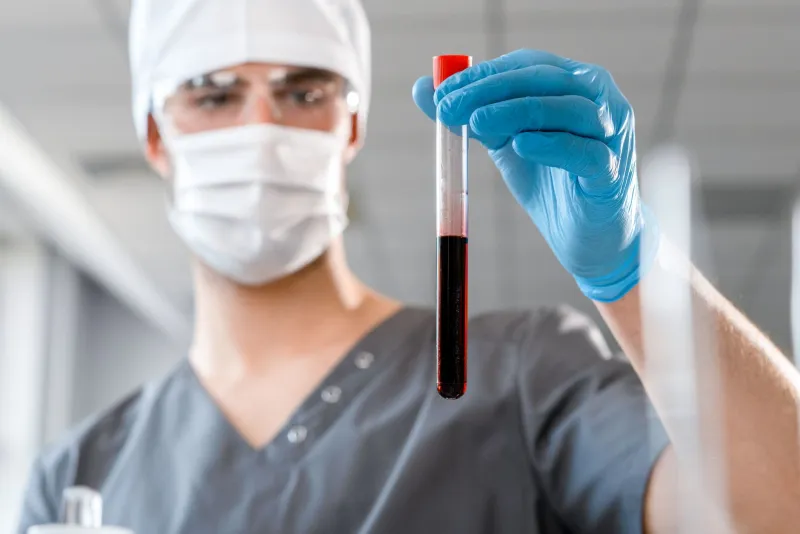
From a clinical standpoint, it means pursuing targeted laboratory testing that goes beyond a single total testosterone reading. Free testosterone, sex hormone-binding globulin, luteinizing hormone, and cortisol all contribute to a more complete hormonal picture. A number that falls within a broad reference range may still represent a meaningful departure from an individual's personal optimal.
The goal of this recalibration is not to dismiss aesthetic fitness — physical conditioning carries genuine health benefits that extend well beyond appearance. The goal is to ensure that the pursuit of those benefits is not inadvertently compromising the hormonal foundation that makes them sustainable.
The Paradox Resolved
Looking strong and being hormonally vital are not mutually exclusive. But they are also not automatically synonymous. The men who navigate this distinction most effectively are those who refuse to let the mirror serve as their only diagnostic tool — who understand that genuine peak performance is built not just on what is visible, but on what is measurable, sustainable, and hormonally supported from the inside out.
The physique may be the most visible expression of your effort. But your hormonal health is the infrastructure that determines how long, and how fully, you can sustain it.